This article was first published on LinkedIn on June 16, 2023. Link to original article.
Investing in 'novel' aviation
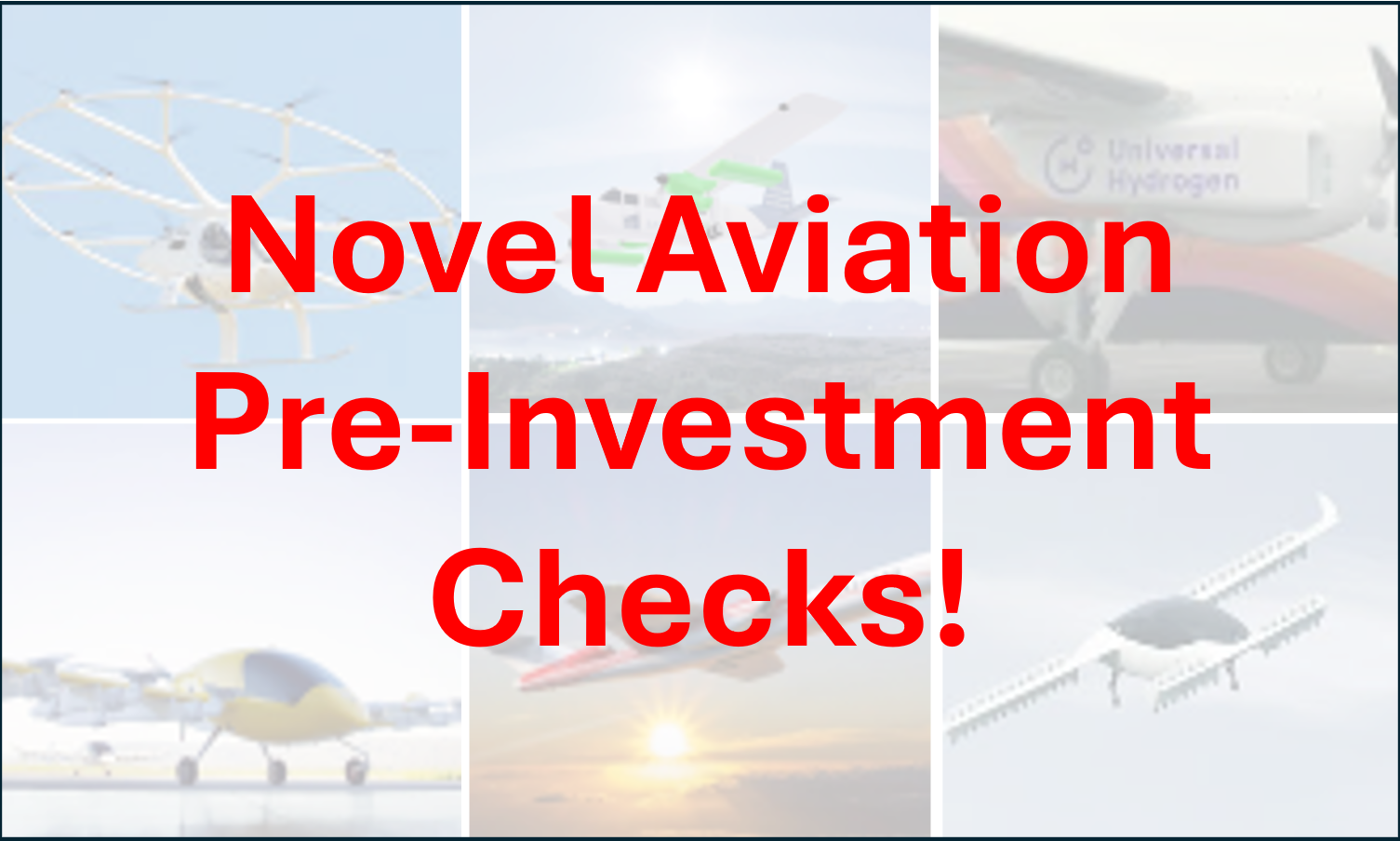
Electric aircraft, hydrogen-powered aircraft and eVTOLs have attracted billions of dollars of investment with their promise to shake up the aviation world.
It’s a promise that has been made before. Just a few years ago we were told that VLJs (‘Very Light Jets’) were going to darken the sky in their thousands, transporting people cheaply between small local airports. But the sky remained undarkened and investors lost billions.
Will electric aviation go the way of the VLJs?
No, it's here to stay. Aviation has to become more sustainable and electrification will be a big part of the solution. But most of the designs now in development will fail. So how can investors spot potential winners and avoid the projects that will crash and burn (hopefully just metaphorically)?
Here are 10 thoughts.
1. If technological progress is an unstoppable force, aircraft certification is an immovable object. Don’t invest in a company unless its leaders really understand that:
- Certification is expensive, difficult and slow.
- Past experience is invaluable.
- Certification is unavoidable.
- New technology is harder to certify than old technology, even when it’s better.
2. If a company claims it can simplify or bypass certification in a way that nobody has thought of before, two things are true:
- Someone did think of it.
- It didn’t work.
3. Engines need to be certified too, even electric ones. Trying to certify a new aircraft and a new engine at the same time is a great way to run out of money without certifying anything.
4. Certification standards for new technologies like electric motors or hydrogen fuel cells haven’t yet been agreed. They can be certified, but it will take longer and cost more than certifying a conventional engine.
5. If the aircraft is battery powered, it will either weigh too much or have a very short range. Or, most likely, both. If the aircraft needs ‘future battery technology’ to achieve its performance targets, invest in that rather than in an aircraft that depends on it.
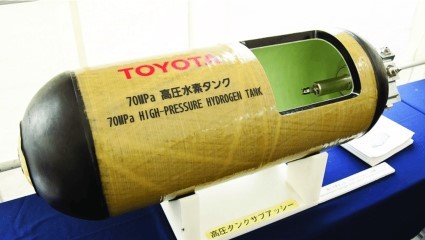
6. If the aircraft is powered by hydrogen fuel cells, the hydrogen tanks will be very big and heavy. Certification will be very complicated. Operations will be very limited because there is no refuelling infrastructure. Hydrogen technology is fundamentally limited by physics and chemistry - and the high cost of 'green' hydrogen. If the company downplays these issues, invest in something else instead. In fact, even if they don't downplay these issues, you'd do well to look elsewhere - the problems are that big.
7. Flight control software and ‘fly-by-wire’ systems need to be certified. Certification is very complicated, very expensive and very slow.
8. Production of aircraft and aircraft components also needs certification, in the form of a Production Certificate. Obtaining one is expensive, hard work and slow. It is also essential.
9. Question whether there is really a market for the new aircraft.
- Can it do something that existing aircraft can’t?
- Can it do it when the weather is bad?
- Can it do it within the existing rules of the air, or do some laws need to change first?
- Will enough customers want to pay to do it regularly?
10. Finally, ask yourself if you’d trust the company’s leaders and their product with the lives of the people you love most. Software and modern manufacturing techniques have changed aviation companies and reduced barriers to entry, but they haven’t made the industry any more forgiving of mistakes.
(I stopped at 10, but in the real world I'd ask questions about materials testing, structural testing, flight testing, fatigue testing, pilot training, maintenance technician training, in-field support and repairs. I'd ask about batteries: what's the peak power requirement, total energy requirement, recharging time, battery life? I'd ask about failure modes - how will the aircraft operate if critical systems fail or are damaged in flight? If any of those questions led to blank looks or unconvincing answers, it would be a red flag.)
The novel and sustainable aviation sector has looked like an investment bubble for some time, and unlucky investors are about to lose their money. But, at the same time, there are many good projects looking for funding. It's a complicated field for the non-specialist, with innovative and entrepreneurial tech companies having to work within constraints set by risk-averse regulators.
If you’re a current investor, of if you’re contemplating an investment, please get in touch to see if we can help. I've worked on aircraft development, certification and operation in Europe and the United States, advised investors on technical and commercial due diligence, and worked with founders to raise capital. I'm always happy to share my thoughts about what's realistic and what's not.
About the Author: Adrian Norris
Adrian Norris is an aerospace advisor with over 30 years of international experience spanning strategic consulting, aviation and space startups, aircraft development and certification, and corporate leadership. He works with investors, founders, and executives to shape strategy, assess feasibility and risk, and distinguish real opportunities from industry hype.
Adrian co-founded an aircraft development company and brings a unique blend of technical and commercial insight. He trained as a chemist, holds a Master’s degree in Leadership and Strategy, and is a licensed commercial pilot.
Contact
Get in touch to discuss a current project or investment.
We provide independent, evidence-based analysis to support investment and strategic decisions.